
Dr. Thomas Whitfield, Senior Health and Science Editor.
You are standing at the bathroom mirror at 7:12 a.m., holding a bottle you bought because a friend swore by it, and it is doing nothing to hide the redness along your jaw. The drawer under the sink has four other bottles in various states of use, each purchased on the same promise: this one will finally cover everything. Full-coverage foundation is one of the most searched terms in beauty, and also one of the most misunderstood. The coverage level printed on the label describes how much pigment is in the formula, not how good the formula is for your particular skin, your climate, or the light you actually live in. Get the shade and the finish wrong and even the most opaque formula will look like a mask by lunchtime. This guide walks through what full coverage is actually built from, how to judge it honestly on your own face, and where the marketing language is doing more work than the product.
- Coverage level and shade match are two different problems, and most disappointing foundation purchases come from solving only one of them.
- Daylight, not store lighting, is the only honest test for undertone and finish.
- Thin layers applied in stages cover more evenly than one thick layer, even when the goal is maximum opacity.
Finding Your Undertone In Daylight
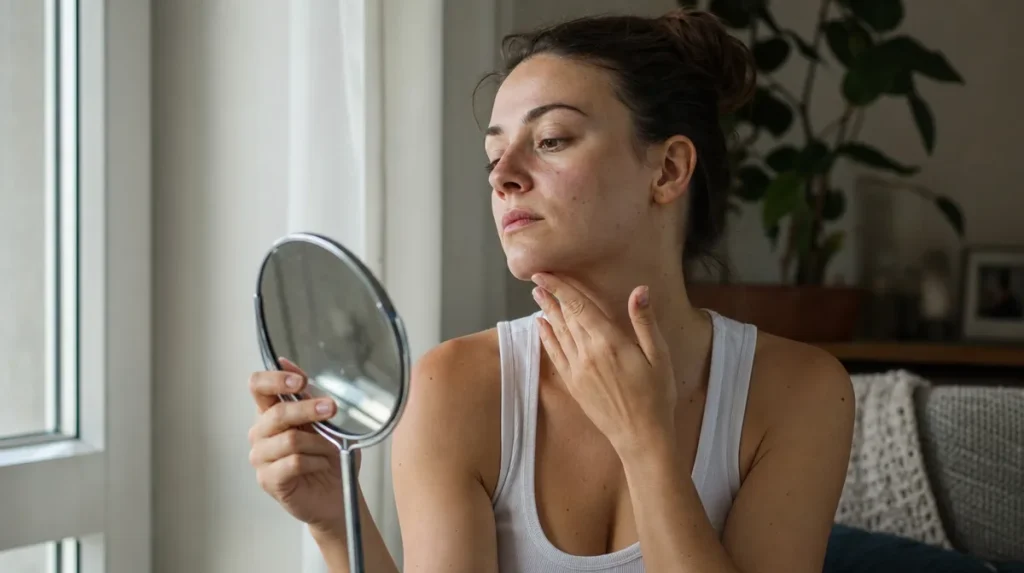
Undertone is the color beneath your skin’s surface, the warm gold, cool pink, or neutral balance that stays constant even as your surface tone shifts with a summer tan or a pale February. Confusing undertone with depth, meaning how light or dark you are, is the single most common shade-matching error, and it is why a fair, warm-toned reader can swatch a “fair” shade and still see gray in her cheeks.
Think of it the way a paint department at a hardware store handles color. Two chips can be labeled the same lightness and still read completely different once they are on a wall, because one carries more yellow and one carries more blue. Foundation works the same way, except the wall is your face and the light changes constantly.
The only reliable test happens near a window, in daylight, with no makeup already on the skin. Store lighting, whether fluorescent or the warm bulbs many beauty counters favor, will flatter almost anything. Swatch two or three candidate shades along the jaw, not the back of the hand, and step outside or near a window for fifteen seconds before deciding. If a shade disappears into the neck and jaw with no visible line, that is the match.
The American Academy of Dermatology’s public guidance on cosmetic use notes that skin tone can shift seasonally, which is one reason the shade you wore in July may need adjusting by November. A shade that looked right during a tan will often oxidize warmer or read ashy once the tan fades, so it is worth rechecking undertone twice a year rather than assuming one match lasts forever.
Reading The Label Vs Marketing Claims
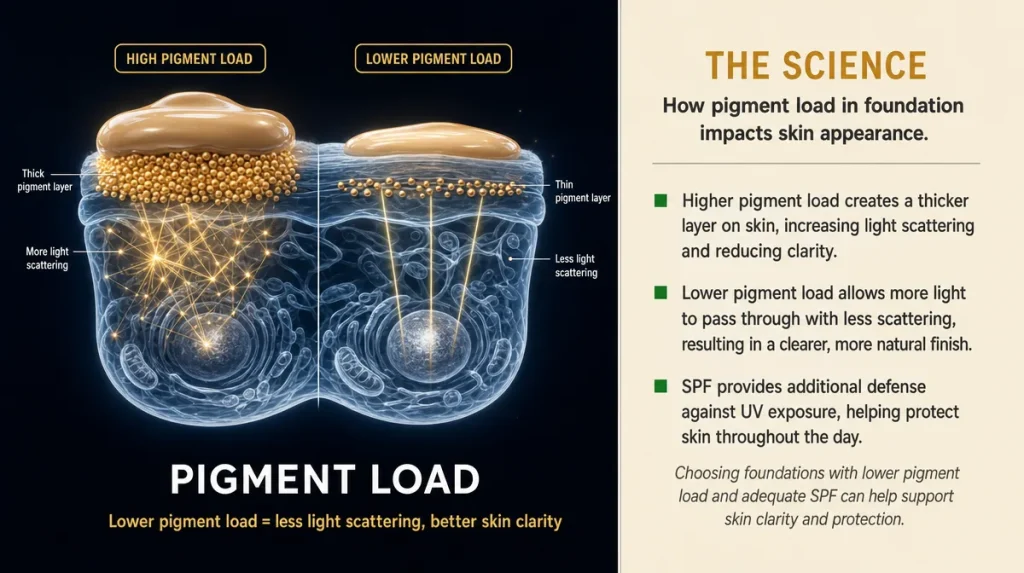
Full coverage, medium coverage, and buildable are marketing categories, not regulated terms, so two bottles labeled “full coverage” can behave completely differently. What actually determines opacity is pigment load, the percentage of the formula that is color rather than water, oil, or emollient. A higher pigment load covers more in one pass but also sits heavier on the skin and is more likely to settle into fine lines by afternoon.
A simple way to think about it: pigment load is like the amount of flour in a sauce. A little thickens gently. Add too much and the sauce turns pasty no matter how well you stir it. Foundation behaves the same way on skin.
Ignore words like “flawless,” “airbrushed,” or “photographed in studio lighting” on packaging. Studio lighting is diffused and shadowless by design, which is the opposite of the daylight or office fluorescent light most people wear makeup under. A formula that photographs well under a ring light may still crease around the nose in an ordinary conference room.
What is worth reading on the label: the first five ingredients, which make up most of the formula’s weight, and whether the product lists a specific SPF value or none at all. Beauty-editorial outlets like Byrdie have pushed brands toward listing pigment percentage and finish type more plainly in recent years, but the terms “full coverage” and “long-wear” still carry no legal definition, so the label is a starting point, not a guarantee.
The Shade-matching Mistake Everyone Makes
The most repeated mistake is choosing a shade under counter lighting and never rechecking it outdoors before the return window closes. Department and drugstore lighting is engineered to be flattering, warm-toned, and shadow-free, which means almost every shade looks acceptable under it.
It is the same problem as buying a coat indoors under warm store bulbs, only to step outside and notice it clashes with everything else you own. The coat did not change. The light did.
A second common error is matching to the back of the hand instead of the jaw and neck, two areas that are almost always a different depth than the face. The jawline is the transition zone between face and neck, and it is the area a foundation must blend into seamlessly or the mismatch becomes obvious in photographs taken from below, which is most phone selfies.
A third mistake, less discussed, is assuming a shade that matched in spring still matches in August. Sun exposure changes surface tone faster than most people expect, and a formula that once vanished into the skin can suddenly sit a full shade too light. Rechecking match at the start of each season, the way you would check a smoke detector battery, takes under a minute and prevents most of the “why does this look orange” moments that end up in a drawer of half-used bottles.
Application: Building Coverage Without Heaviness
The instinct with full-coverage formulas is to apply once, heavily, assuming more product equals more coverage. It is the opposite of how paint actually covers a wall: two thin coats bond more evenly and hide more than one thick coat, which tends to pool in corners and crack as it dries.
Foundation follows the same logic. A thin first layer, patted rather than dragged, fills in the overall tone. A second thin layer, applied only where redness or dark spots persist, does the real work of coverage. This two-pass method uses less product overall than a single heavy application and looks noticeably more like skin rather than a layer sitting on top of it.
Tools matter less than technique, but they matter some. A damp makeup sponge, the kind sold at any drugstore or at Target and CVS, distributes product more thinly than fingers alone and absorbs a small amount of excess, which helps prevent the caked look that shows up in flash photography. A dense brush pushes more pigment into the skin per stroke, useful for a stubborn patch of redness but too much for the whole face.
The area most people over-apply is directly under the eyes, where skin is thinnest and any product settles into fine lines within an hour. A lighter hand there, with a separate concealer only where genuinely needed, keeps the under-eye area from looking heavier than the rest of the face by midday.
Setting And Longevity Through The Day
Setting powder and setting spray do different jobs, and using the wrong one in the wrong order is why some full-coverage looks slide by 3 p.m. while others hold until dinner.
Powder absorbs the oil that foundation will eventually mix with as skin warms through the day. Spray, applied last, binds the layers together so they move less against each other. Skipping powder in oily zones, the forehead, nose, and chin, is the most common reason coverage appears to “melt,” when what is actually happening is the foundation mixing with oil and sliding toward pores and creases.
Think of setting spray the way a baker thinks of an egg wash on pastry: it does not add flavor or structure, it just seals what is already there so it holds its shape in the oven of a warm office or a subway platform in August.
A fair test of longevity is not how a foundation looks right after application, but how it looks four hours later without a touch-up. Photograph your face in the same light at 10 a.m. and again at 2 p.m. If the difference is mostly shine in the T-zone, powder placement was the issue, not the foundation’s staying power. If the difference is patchiness around the nose or mouth where you talk and move most, the formula itself may not suit your skin’s actual oil production, which the American Academy of Dermatology notes varies significantly by individual and by season.
Humid Summer Vs Dry Winter Adjustments
A formula that performs beautifully in a dry Denver winter can slide off entirely during a humid August week on the East Coast, and the reverse is just as common: a formula built for humidity can look flaky and gray once the heat comes on indoors in December.
Humidity adds moisture to the air that skin absorbs, which loosens the bond between foundation and skin the same way a damp envelope flap loses its seal. Dry, heated indoor air pulls moisture out of skin, which can make any foundation with a matte finish look powdery and emphasize dry patches around the nose and mouth.
The practical fix is seasonal, not product-specific: lean toward a lighter layer with a setting spray in summer humidity, and add a hydrating layer underneath in winter before foundation goes on at all, so the formula has something to grip rather than sitting on dry surface skin. Fall is often the easiest season to wear full coverage well, since temperature and humidity both sit in a middle range, which is one reason so many beauty routines reset around the pumpkin-spice retail season each year.
Reapplying the same routine year-round without adjusting for the season is a quieter mistake than shade mismatch, but it explains a surprising share of the “this worked all spring and now it doesn’t” complaints editors hear every fall and every summer.
Judging Results: How To Tell If It’s Working
A foundation is working if, from three feet away in ordinary daylight, a stranger would describe your skin rather than your makeup. That single test filters out most bad matches and most over-application before either becomes a habit.
Up close, in a bathroom mirror under bright light, almost any foundation looks more visible than it will in the rest of your day, which is why so many people over-correct at the mirror and then look overdone in the office or outdoors. Judge results at conversational distance, not inspection distance.
A second, more patient test is the four-hour check described earlier: does the coverage still look like skin at 2 p.m., or has it separated into shine and patchiness. Good Housekeeping Institute’s published testing guides for makeup longevity generally track wear at multiple hourly intervals rather than immediately after application, a reasonable habit to borrow at home with nothing more than a phone camera and the same window light each time.
If a formula requires touch-ups before noon every single day regardless of how it is applied, the mismatch is usually with skin type rather than technique. Oily skin needs an oil-absorbing base layer underneath, dry skin needs a hydrating one, and no amount of correct application fixes a foundation fighting the wrong canvas.
What Matters Vs Marketing Hype
Terms like “24-hour wear,” “second skin,” and “weightless full coverage” describe a feeling brands want you to expect, not a measurable standard any regulator checks. No foundation genuinely performs identically at hour one and hour twenty-four on real skin, which continues producing oil, sweating, and shedding cells the entire time.
What matters more than any phrase on the bottle: pigment load, which determines true opacity, undertone accuracy, which determines whether it disappears into your skin at all, and finish, which determines how it photographs and how it feels by afternoon. These three variables explain almost every complaint and almost every success story, far more than whether the label says “luxury” or lists a longer ingredient roster.
Price is a weak predictor of performance here. Some of the most consistently well-reviewed full-coverage formulas sit at accessible drugstore price points at Target, CVS, or Walgreens, while some higher-priced options from Sephora or Ulta Beauty underperform on oily skin in humid weather despite elegant packaging. Beauty coverage from outlets like Vogue and Allure has noted that reader-favorite “holy grail” foundations tend to cluster across price tiers rather than at the top of them, which tracks with how pigment chemistry, not packaging cost, drives the result.
The honest question to ask before buying is not what a label promises, but whether it matches your undertone in daylight, and whether you can apply it in two thin layers rather than one thick one. Everything else on the label is secondary.
Key Takeaways
Full-coverage foundation disappoints far more often from a shade or technique mismatch than from a flawed formula. Undertone, checked in daylight rather than store light, solves more problems than switching products ever will. Two thin layers, built up only where needed, cover more evenly than one heavy pass, and the season changes what a formula needs underneath it to perform. Judge results from three feet away in ordinary light, and recheck your match twice a year, since skin tone shifts with the seasons more than most people expect.
A Quick Checklist Before You Buy
- Swatch three candidate shades along the jaw in daylight, not at the counter.
- Check the first five ingredients and any listed SPF value, not the words on the front.
- Plan to apply in two thin layers rather than one heavy pass.
- Match powder and spray to the season: lighter layers in humidity, a hydrating base in dry winter air.
- Recheck your shade match at the start of each season.
- Judge the result from three feet away in ordinary daylight, not up close in a bathroom mirror.
This guide offers general information and does not replace personalized advice from a dermatologist or licensed esthetician.
Individual results vary by skin type, climate, and application technique.