
Dr. Thomas Whitfield, Senior Health and Science Editor.
The drawer under the bathroom sink tells the real story: three curling irons, two of them barely used, one with a cord permanently kinked from being shoved in and out in a hurry. Most women buying a new one type some version of the same question into a search bar at eleven at night: which curling iron actually works. The honest answer has less to do with the brand on the box and more to do with a handful of specs that stylists check automatically and most shoppers never learn to read. Barrel material, for instance, changes how evenly heat reaches the hair shaft, and that single detail does more for curl longevity than wattage ever will. This guide walks through what a professional actually looks at first, in the order it matters, so the next purchase is based on what the tool does rather than what the packaging promises.
- Barrel size should match your hair length and the curl size you want, not the other way around: a mismatch is the most common reason curls fall flat by afternoon.
- Temperature control matters more than wattage: a dial that holds a steady, accurate temperature protects hair better than a high-wattage tool that overheats in spots.
- The coating on the barrel changes how heat transfers to hair, and knowing the difference between ceramic, tourmaline, and titanium prevents both frizz and unnecessary damage.
Matching Barrel Size To Your Hair Length And Curl Goal
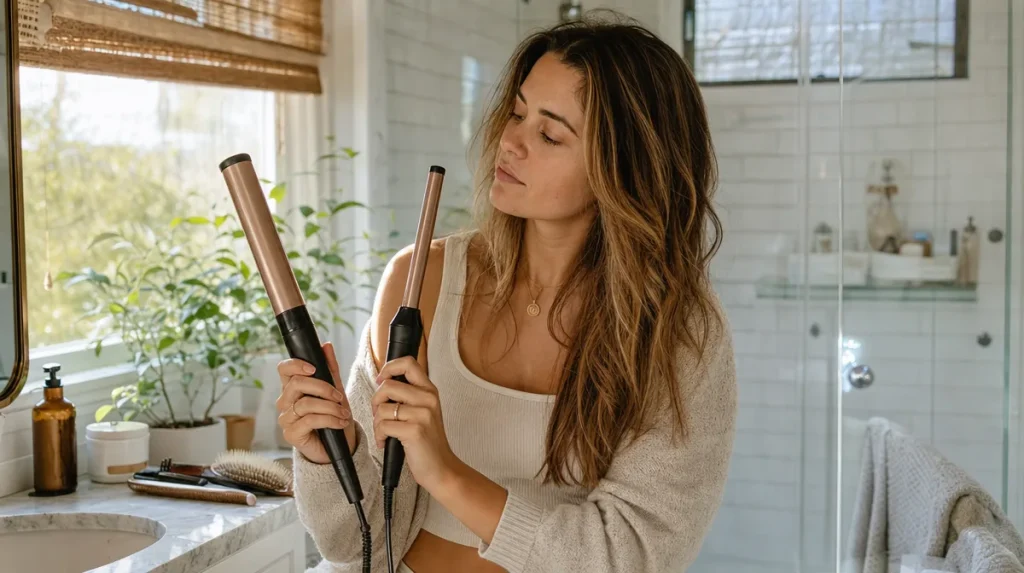
Barrel diameter is the first thing a stylist checks, and it is the spec most shoppers skip past to look at the price tag instead. A one-inch barrel produces a loose, beachy wave. A three-quarter-inch barrel produces a tighter, more defined curl. Anything under half an inch is built for short hair or for spiraling the ends of a longer style, not for full-head curling.
The mistake happens when someone with shoulder-length hair buys a large barrel because it looks like it will be faster to use. In practice, short hair wrapped around a wide barrel never gets enough wraps to hold tension, so the curl loosens within an hour. Longer hair on a narrow barrel does the opposite: it takes forever and can look overly ringleted rather than soft.
A simple self-test: wrap a one-inch section of dry hair around the barrel you are considering, holding it in place with your fingers for ten seconds, then release. If the hair springs back nearly straight, the barrel is too wide for your length. If it holds a tight ringlet immediately, it may be narrower than you actually want for everyday styling.
Hair length is only half of the equation. Hair texture plays a role too. Fine, straight hair generally holds curl better on a slightly smaller barrel because there is less weight pulling the shape down. Thick or coarse hair often needs the larger size simply to process a reasonable number of sections in a normal styling window.
Why The Temperature Dial Matters More Than The Wattage Number
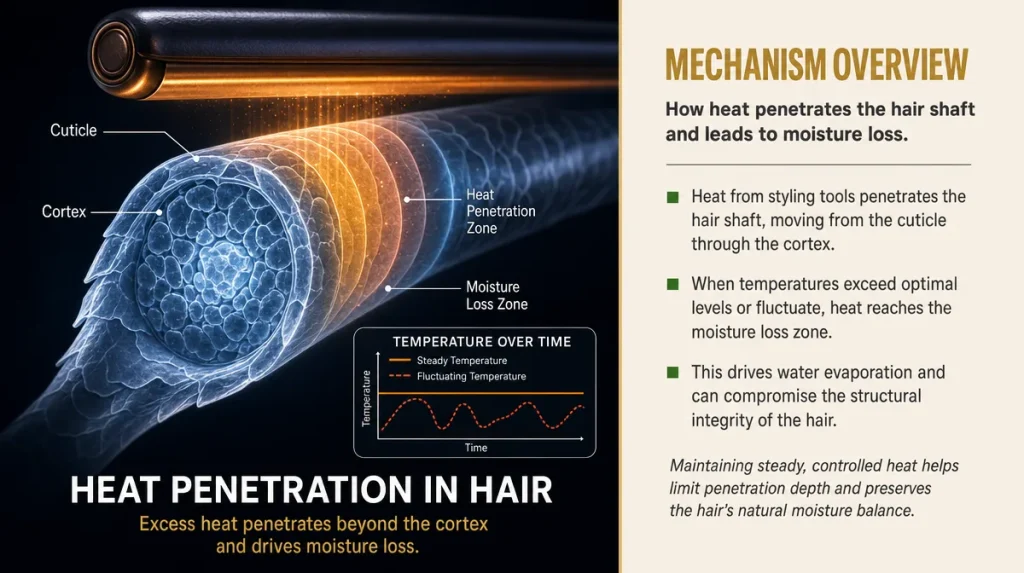
Wattage tells you how fast a tool can heat up. It says almost nothing about how evenly that heat is held once you start wrapping hair around the barrel. This is the distinction most packaging blurs on purpose, because a high wattage number sounds impressive on a shelf.
Think of it the way a stovetop works. A burner that blasts to high heat and then swings wildly up and down will scorch food even if the total energy used is lower than a burner that holds a steady medium flame. Hair behaves the same way under heat. A tool with poor temperature regulation can spike well above its display reading in specific spots along the barrel, and that is where breakage starts.
A 2021 study in the International Journal of Trichology measured surface temperature variance across several heat-styling tools and found some units fluctuated by more than 20 degrees Celsius from their set point during continuous use, while better-regulated models held within a few degrees. The researchers linked wider fluctuation to measurably higher rates of cuticle lifting on hair swatches tested afterward.
For most hair types, 300 to 350 degrees Fahrenheit curls effectively without excessive stress. Fine or color-treated hair generally does better starting at the lower end of that range. The American Academy of Dermatology’s general guidance on hair care recommends keeping heat tools on the lowest setting that still achieves the desired result, and checking that a tool has a numbered, adjustable dial rather than a single on-off switch, since the latter often defaults to maximum heat regardless of hair type.
Ceramic, Tourmaline, And Titanium: What The Coating Is Really For
Barrel coating is the detail most often reduced to a marketing word on the box, but the differences are real and they change how hair responds to heat.
Ceramic barrels heat evenly and release heat gradually, which makes them forgiving for everyday use and for finer hair that scorches easily. Tourmaline is a crushed mineral blended into a ceramic coating that, when heated, releases negative ions. Those ions are credited with smoothing the hair cuticle and reducing static, which is why tourmaline tools tend to produce a glossier, less frizzy curl, particularly in dry winter air with indoor heating running. Titanium barrels heat up fastest and hold the highest temperatures, which suits thick or coarse hair that resists curling, but the fast, intense heat makes titanium a poor match for fine or already-damaged strands.
A basic comparison: run a hand near, not on, a heated barrel after it reaches temperature. A ceramic barrel feels like a warm iron. A titanium barrel feels noticeably hotter at the same dial setting, which is the clearest sign of how differently these materials transfer heat.
None of this means one material is universally better. It means the coating should match hair type and heat tolerance, the same way a cast-iron skillet and a nonstick pan both cook eggs but behave very differently depending on what else is in the pan. A 2020 review in the Journal of Cosmetic Science noted that ion-emitting coatings showed measurably reduced static charge on treated hair swatches compared to standard ceramic, though the difference was most noticeable on hair that had been chemically treated or color-processed.
Clamp Or Clampless: What Actually Changes The Result
The clamp, or the lack of one, decides how much of the technique rests on the user rather than the tool.
A clamped iron holds the hair section against the barrel automatically, which makes it more forgiving for beginners and faster for anyone curling a full head on a weekday morning. The tradeoff is a visible crease or bend where the clamp presses the hair, especially if the section is pulled too tightly or left in the clamp too long.
A clampless wand requires the user to wrap hair around the barrel by hand, usually while wearing a heat-resistant glove. This takes longer to learn, but it removes the crease entirely and generally produces a more natural-looking curl, since the hair is never pinched flat at any point.
The household comparison that tends to land: a clamp is like a stapler, fast and consistent, but it leaves a mark where it closes. A wand is like hand-folding paper, slower, with a learning curve, but nothing gets pinched.
For curly or wavy hair that already has natural texture, a wand often blends more seamlessly with the existing pattern. For straight, fine hair that needs more structure to hold a curl at all, the firmer grip of a clamp can actually help the curl set. Neither is objectively superior. The right choice depends on starting texture and on how much time a person genuinely has most mornings, which is a more honest question than it sounds.
Spotting Heat Damage Before It Shows In The Mirror
Visible damage, the kind that shows up as split ends or a dull, straw-like texture, is a late sign. By the time hair looks damaged, the cuticle has already been compromised for weeks or months of repeated heat exposure.
The earlier sign is tactile, not visual. Run a dry strand of hair between two fingers from root to tip. Healthy hair feels smooth in one direction and slightly rougher against the grain, a sign the cuticle scales still lie flat. Hair that feels uniformly rough in both directions, or that catches on dry fingers, often has a lifted or eroded cuticle layer, frequently from heat exposure that is a bit too high or too frequent.
Another early sign is how long a curl holds. If a curl that used to last until evening now drops within an hour or two despite the same tool and the same technique, that is often a sign the hair’s internal moisture balance has shifted, not a sign the tool suddenly stopped working.
Mayo Clinic’s general guidance on hair care advises limiting heat styling to a few times a week when possible and always using a heat protectant spray or serum beforehand, since these products create a thin barrier that can reduce direct heat transfer to the hair shaft. Air-drying hair partially before using a hot tool also reduces the total heat exposure needed to finish a style, since wet hair requires more sustained heat to set a curl than damp or dry hair does.
What Makes A Curl Hold Past Lunch
Curl longevity depends on three things working together: the hair’s starting moisture level, the temperature used, and how long the curl is allowed to cool before being touched.
The cooling step is the one almost everyone skips. Hair sets its new shape as it cools, not while it is hot. Releasing a curl from the barrel and immediately running fingers through it, or brushing it out right away, interrupts that setting process before it finishes. Letting each curl cool fully, which takes roughly 10 to 15 seconds, before moving to the next section allows the hair’s internal bonds to stabilize in the new shape.
A simple test: curl one section and let it hang, untouched, for 30 seconds. Curl a second section and immediately brush through it. Compare how each looks an hour later. The difference is usually obvious and it has nothing to do with the tool used.
Humidity plays a role too, particularly on the East Coast in summer, where moisture in the air can soften a curl’s hold within an hour regardless of technique. A lightweight hairspray applied in sections while curling, rather than all at once at the end, tends to extend hold better in humid conditions than a heavier product applied after the fact. In dry winter conditions with indoor heating running, the opposite problem shows up: hair can be too dry to hold curl at all, which is where a hydrating leave-in treatment before styling often does more than any spray applied afterward.
Telling Real Spec From Marketing Language On The Box
Packaging language has gotten good at sounding technical without saying much. A few phrases are worth reading past.
“Professional grade” has no regulated definition in the beauty industry. It can mean the tool is genuinely built to the same standard a salon uses, or it can mean nothing at all. The way to verify it is to look for an actual adjustable temperature display with a numeric readout, since genuine salon-grade tools almost always include one.
“Infrared heat” and “far-infrared technology” refer to a real method of heating hair more gently from within rather than just from the barrel surface, but the benefit is modest and mostly relevant for very fine or damaged hair. It is not a reason by itself to pay significantly more.
“Instant heat-up” is usually true but rarely useful information, since most tools, regardless of price, reach working temperature within a minute or two.
Good Housekeeping’s published consumer buying guidance for heat tools generally recommends checking for an auto-shutoff feature and a swivel cord, both practical safety and convenience details that have nothing to do with styling performance but matter for everyday use. Those two features are a reasonable baseline to look for regardless of brand or price point, since they address safety rather than marketing.
Key Takeaways
Barrel size should match hair length and desired curl size, not convenience. Temperature stability matters more than peak wattage. Coating material should match hair type and heat tolerance rather than whichever sounds most advanced on the label. A clamp speeds up styling but can crease hair, while a wand takes longer but avoids that crease. Letting each curl cool before touching it does more for hold than any product applied afterward. And a few packaging phrases, like ‘professional grade’ or ‘instant heat-up,’ say less than they appear to.
A Quick Checklist Before Buying
- Does the barrel size match your actual hair length, tested by wrapping a section around it?
- Does the tool have a numbered, adjustable temperature dial rather than a single switch?
- Is the coating suited to your hair type: ceramic for fine hair, titanium for thick or coarse hair, tourmaline for frizz-prone or color-treated hair?
- Does a clamp or clampless design better match your styling time and hair texture?
- Does the tool include an auto-shutoff feature and a swivel cord?
- Are you using a heat protectant and letting curls cool before brushing them out?
This article is for general information only and is not a substitute for professional advice.
Individual results vary depending on hair type, texture, and condition.